Setting up a car rental company: Legal requirements and everything you need to know

Setting up a car rental company: Legal requirements and everything you need to know

12.05.2025

The decision to start a car rental business is the first step into a potentially profitable business area. Car rental companies offer flexibility and mobility for customers who need a vehicle at short notice, making them an attractive option for many people. In 2023, car rental companies in Germany generated sales of over 18 billion euros, according to Statista. The impressive level of turnover shows the economic potential of the industry – which is also reflected in the large number of car rental companies in Germany.

But before you get started, it’s important to understand the legal and business aspects. In this article, you will find out what requirements and steps are necessary to successfully enter the world of car rental.

First steps - founding a company

Before you can launch your car rental business, you need to familiarize yourself with the legal and tax framework in addition to the financial aspects. We recommend that you seek qualified advice from lawyers and tax consultants specializing in business start-ups.

Choice of legal form

A crucial first step is deciding on the legal form in which you want to operate your company. The choice of the right legal form has long-term effects on the start-up costs, (personal) liability, taxes and the administrative work involved in running the company. Whether the business is to be run by a sole proprietorship, a partnership (GbR, OHG; KG) or a corporation (GmbH, UG, AG) will depend above all on the financial resources and tax issues, so this decision should be made after consulting a qualified tax advisor. For the formation of some companies (e.g. GmbH or a UG), the law provides for mandatory notarization, others “only” have to be registered in the commercial register of the local court responsible for you. In any case, this incurs additional costs for the notarial work, including the costs for registration with the commercial register.

Notification obligations of all kinds

Once you have chosen the right legal form for you and founded a company, you must notify the competent authority (usually the city or municipality in whose district the activity is to be carried out) of the commencement of commercial activity. The authority in turn informs a number of other institutions about the commencement of the activity, including the relevant Chamber of Industry and Commerce (IHK) and the tax office. Despite this information, however, you must also notify the tax office of the commencement of business activities yourself.

If you wish to employ staff, you must contact the relevant Berufsgenossenschaft Verkehr (Employer’s Liability Insurance Association for Transport) as the statutory accident insurance institution within one week. As a solo self-employed person, you should consider the possibility of voluntary membership of the BG.

Protecting your brand

Recognition is crucial in the highly competitive car rental industry. A trademark registration protects you from imitators and strengthens your position on the market. If you operate internationally, an EU-wide trademark registration may make sense. You should also seek qualified advice on this from a law firm specializing in trademark law or a patent law firm.

Voluntary memberships

Involvement in industry associations such as the Bundesverband der
Autovermieter Deutschlands e. V. (BAV) or the Verband Deutscher Autovermieter e. V. (VDAEV) can offer advantages in terms of exchange, further training or political representation of interests – but is voluntary.

Insurance obligations for car rental companies

The right insurance cover is essential – for you, your vehicles and your customers.

Important insurances at a glance:

  • Motor vehicle liability and comprehensive insurance for your rental vehicles
  • Public liability insurance to protect yourself against third-party claims for damages
  • Building insurance for your business premises and furnishings
  • Legal expenses insurance to cover financial risks arising from legal disputes.

Our tip for you: Always consult an independent insurance broker with experience in the motor vehicle sector. This will ensure that you are optimally insured in line with your needs.

Financing options

Financing your car rental can be a challenge, but there are numerous options you can consider.

Traditional bank loans offer fixed interest rates and repayment schedules, while leasing can reduce initial costs and offer flexibility in fleet management. Investors or venture capitalists may be willing to invest in your business in exchange for an equity stake. There is also government funding and grants available specifically for small and medium sized businesses. Crowdfunding platforms make it possible to raise funds from a wide range of supporters. Finally, you can also use your own capital or that of partners to finance the company. It is crucial to carefully consider the pros and cons of each option and choose the one that best suits your business model and financial goals.

In order to operate cost-efficiently, it is worth looking at providers such as Choice, which offer car rental companies attractive purchasing conditions – especially when purchasing vehicles.
About our Mobility Partnership you not only secure the best conditions, but also flexible solutions for fleet expansion: this allows you to efficiently cover peak demand and renew or expand your vehicle fleet in a targeted manner.

Vehicle fleet and fleet management

The selection and management of your vehicle fleet is crucial to the success of your car rental business.

With our Mobility Partnership we offer you exactly the right solutions for this: from fleet optimization and temporary vehicle additions to support for fleet growth. This allows you to keep an eye on your costs – and remain agile at the same time.

Business strategy: a must for your car rental company

A professionally prepared business plan is essential for setting up your car rental company. It not only serves as a roadmap for your business, but is also crucial in convincing potential lenders or franchise partners of your business idea. Your business plan should be comprehensive and cover the following key points:

  • Market analysis: Analyze the competition and examine what your competitors are doing. What strategies are they using and how can you differentiate yourself in the market?
  • Location: Carry out a thorough location analysis. Consider whether the market in the desired region may already be saturated or whether there is potential for growth.
  • Marketing: Plan your advertising measures and set a budget. Which advertising media do you want to use to reach your target group effectively?

A well thought-out business plan is the key to successfully launching and running your car rental business in the long term.

The right location for your car rental

Choosing the right location is crucial to the success of your car rental business. Start with a comprehensive location analysis to evaluate the potential of different regions. Consider factors such as population density, the local economy and the presence of competitors. An ideal location should have a high demand for rental vehicles, whether from tourism, business travelers or locals. Also look for proximity to transportation hubs such as airports, train stations or large hotels, as this facilitates access to potential customers. Finally, consider the cost of renting or buying property and the availability of parking. A careful choice of location can lay the foundation for the success of your business.

Marketing for your car rental company

An effective marketing concept is crucial for successfully positioning your car rental company on the market. Start by precisely defining your target group and tailoring your advertising measures accordingly. Use both traditional and digital marketing channels to achieve a broad reach. Online advertising, social media, a clear website and search engine optimization can help to increase your visibility and appeal to potential customers. At the same time, you should consider local advertising measures, such as partnerships with hotels or travel agencies. Customer reviews and recommendations also play an important role in marketing. Encourage satisfied customers to leave positive reviews to gain the trust of new customers. A well-thought-out marketing concept can make all the difference and set your car rental company apart from the competition.

Conclusion

Setting up a car rental company requires not only entrepreneurial thinking, but also sound knowledge of the legal, financial and organizational framework. Those who deal with the decisive factors at an early stage create a stable basis for sustainable success.

Whether financing, setting up a fleet or choosing a location – the more careful the preparation, the stronger the positioning on the market. Take advantage of the potential of this dynamic sector and start your self-employment in the mobility sector with a clear plan.

Corporate design for car rental companies: Why it’s important & what to look out for

Corporate design for car rental companies: Why it's important and what to look out for

10.04.2025

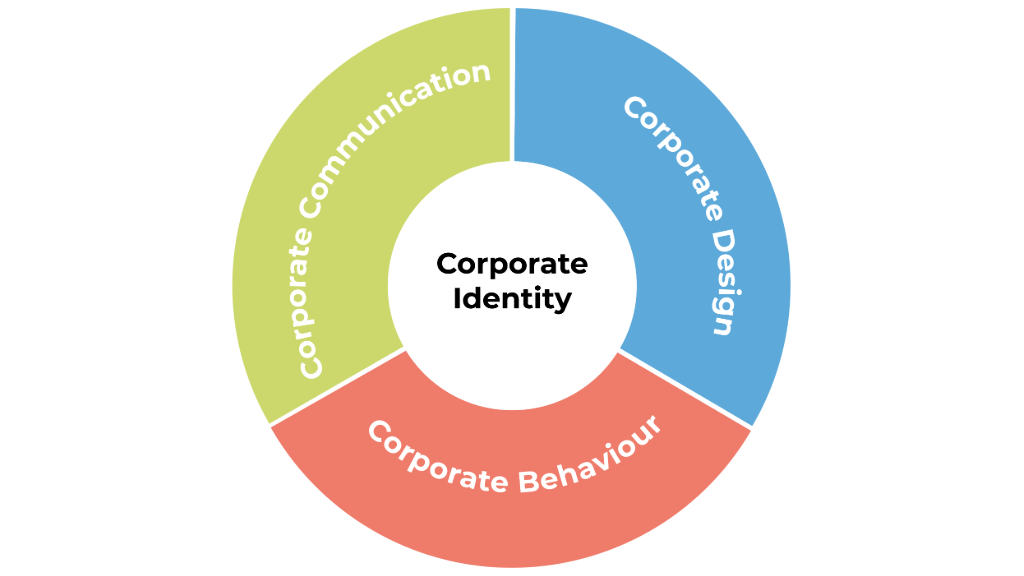
In today’s highly competitive world, it is essential for every company – including car rental companies – to have a strong corporate identity. This identity not only defines the visual appearance, but also encompasses corporate communication and corporate culture. Together, these elements form the overall image and are crucial for the perception and long-term success of a company.

A well thought-out corporate design (CD) is a central component of this corporate identity. Your customers cannot identify with companies, they identify with faces. The corporate design is the face of your company. When you think of big brands, you probably first think of visual elements such as the logo or the colors. A good corporate design therefore helps car rental companies to stand out from the competition, retain customers and convey a consistent brand image. In this article, you will learn which aspects you should consider when developing a strong corporate design.

Logo: The heart of your brand identity

A strong logo is the heart of the corporate design. It represents the brand at first glance and should therefore be concise and meaningful. Make sure that it is easily recognizable and that your brand name is easy to read. For brands that are still unknown, the logo should discreetly explain what your company does. You can achieve this, for example, with a small slogan under the logo or a meaningful image in the logo (the so-called signet). Berit Garbrecht, our Head of Marketing, explains what we paid attention to when creating our logo: “With our logo, we paid particular attention to the legibility of the brand. With the smaller O, we have an element that has a high recognition value. It may also remind some people of the round shape of car tires, whereby we demonstrate the mobility aspect of our brand. With the latest adaptation of our corporate design, we wanted to create an additional element that can be used to complement the logo to give a more subtle indication of our brand without always having to use the entire logo,” explains Berit. The signet is an excerpt from our logo and stands for mobility: the circle symbolizes mobility, while the two bars represent our Mobility Partnership and mobility-OS products. “We particularly like to use it when there is not enough space to use the full logo or when we want it to be less noticeable,” says Berit.

Typography and color choice: How your brand communicates visually

Choosing the right typography is crucial to communicating a company’s personality and values. For your stationery, you should choose fonts that reflect the identity of your brand. It is important to consider appropriate fonts for all media, body text in brochures and on your website, as well as for decorative purposes. Typography should be clear, legible and consistent across all communication channels. Ideally, the chosen font should match your logo to convey a consistent image.

Colors are much more than an aesthetic tool – they convey emotions, values and moods. When Berit Garbrecht, our Head of Marketing, took up her position at Choice AG, the corporate design was in a state of upheaval. Choice’s designs used to thrive on color and variety, but over the years these were reduced and led to a black and white appearance. Berit realized that important elements were missing and that the design no longer reflected the colorful diversity and different characters of our company. “A corporate design is the face of a brand, while the company values represent its personality,” emphasizes Berit. However, this personality should also be reflected in our colors. “People should be able to identify with our brand.”

To achieve this, Berit initiated a creative process. It is often useful to ask which colors people prefer in order to find out which colors suit a person. These preferences are often defined by seasons. Berit asked her colleagues the question: “What season would Choice AG be if she were one?” The answer was clear: a late spring, which embodies a positive attitude because people are looking forward to summer. “We feel this as a company and work together to grow,” she explains. “These answers inspired me. I chose a picture of a spring landscape and extracted the colors from it to develop our new color palette.” Blue stands for reliability, green symbolizes respect and terracotta represents energy. These colors are the visual heart of our new design.

This story is intended as an example of how you can arrive at your individual corporate colors. Of course, you can also find the perfect corporate colors in other ways. However, it is advisable to pay attention to color theory. People associate different emotions with different colors. While red is often perceived as aggressive, yellow, for example, is a rather calm, balanced color. Think about how you want your brand to come across and adapt your colors accordingly.

Style guide as the key to uniform brand communication

A corporate design style guide is an indispensable tool that ensures that all visual elements of your brand are used consistently and uniformly. It serves as a comprehensive guide for the design of communication materials and helps to maintain brand identity across all channels. The style guide defines how to use the logo, typography, colors and other design elements correctly. It provides detailed instructions on the use of fonts, color palettes and layouts to ensure that all materials reflect the brand values and desired aesthetic.

A well-thought-out style guide not only provides clear guidelines, but also the necessary space for creative development. While a design that is too superficial can offer freedom, there is a danger that it can be restrictive if you don’t dare to design new things for fear of losing consistency. A balanced style guide, on the other hand, makes it possible to innovate within the established framework while maintaining brand integrity.

In addition, a detailed style guide promotes efficiency in the design process. It reduces the need for repeated coordination and corrections, as everyone involved can access a common visual language.

Touchpoints: Consistency in stores and online

Touchpoints are all places and opportunities where customers come into contact with a brand. This applies to the car rental industry as well as other sectors. These touchpoints can take place online, via booking platforms and customer portals, as well as in the physical branches of the car rental company. A consistent design at all these touchpoints is crucial to strengthen brand recognition, build trust and convey professionalism.

Especially when a branch network is being established, it is important that customers experience the same recognition value in every branch. A well-defined corporate design helps to consistently implement the design specifications – whether in the design of the branches or the digital user interfaces. This ensures that customers have the same positive brand experience everywhere.

Corporate design as a competitive advantage for your car rental company

A strong corporate design is more than just an aesthetic aspect; it is a strategic tool that conveys the identity and values of your car rental company to the outside world. By carefully selecting your logo, typography and colors, you not only create a consistent and appealing look, but also an emotional connection with your customers. Overall, a strong corporate design helps to strengthen the brand identity and ensure long-term success.

Choice AG joins the VMF: A step into the future of fleet management

Choice AG joins the VMF: A step into the future of fleet management

Have you ever wondered what the future of fleet management will look like? As a new member of the Verband markenunabhängiger Fuhrparkmanagementgesellschaften e.V. (VMF), Choice AG is proud to be actively shaping this future and developing innovative solutions that meet the requirements of a dynamic market.

About the VMF

The VMF is a renowned association of companies active in the field of fleet management. The association represents the interests of its members and promotes the exchange of knowledge and best practices in the industry. The VMF is committed to the development of standards and solutions that improve efficiency and sustainability in fleet management. Through regular events, studies and projects, the VMF offers a platform to discuss and implement innovative approaches that meet the requirements of a dynamic market.

Influence and co-design

As a member of the VMF, Choice AG has the unique opportunity to play a proactive role in shaping the association’s activities. Choice can contribute project ideas that can be realized together with other members, third-party companies or premium partners. This collaborative approach enables Choice to develop innovative solutions, actively shape the future of fleet management and participate in exciting strategic projects.

Networking and cooperation

Working together with other members and experts in the VMF strengthens our position as a leading mobility service provider. We also look forward to exchanging ideas with experts from the industry and developing innovative solutions together with our partners and the industry as a whole to meet the ever-changing demands of the market.

Future prospects

Membership of the VMF is a further step in our strategic focus on quality and innovation. We are convinced that cooperation within this network will not only improve our own services, but can also make a positive contribution to the industry as a whole. Our values – reliability, drive and respect – are at the heart of everything we do. We are passionate about actively shaping the future of fleet management and realizing our vision of efficient and sustainable mobility. You can find out more about our values and our commitment here read more.

Car subscription or leasing: the ultimate comparison

Car subscription or leasing: the ultimate comparison

31.01.2025

The mobility landscape has changed rapidly in recent years. More and more people are looking for flexible and cost-effective ways to use a car without owning it. Two popular options that reflect this trend are car subscriptions and leasing. But which solution is better suited to individual needs? This article explains the different options in detail and highlights their advantages and disadvantages. A comparison is also made to help you make the right decision. Whether you value flexibility or prefer long-term planning, we offer you a comprehensive overview of the options available to you.

You don’t necessarily have to buy a car to drive it. In addition to the classic car purchase, there are various alternatives available to you: Car leasing, long-term rental and car subscription. Car subscriptions in particular are becoming increasingly popular. But what exactly is behind this concept? A car subscription allows you to use a vehicle for a shorter period of time without having to worry about additional costs such as insurance or maintenance.

How does the car subscription concept work?

The car subscription is a modern and flexible alternative to the traditional vehicle purchase. In contrast to buying or leasing a vehicle, a car subscription offers the option of using a car for a shorter, fixed period of time. This flexibility allows you to switch regularly between different vehicle models. This option is particularly aimed at people who value flexibility and do not want to commit to a single vehicle for the long term. Another advantage of this flexibility is the ability to react quickly to changes in your personal or professional situation without being tied to long-term commitments.

A major advantage of the car subscription is that there are no additional costs. Costs for insurance, maintenance and registration are already included in the monthly flat rate. This means that you only have to pay for the fuel or electricity that you actually use.

In addition, the shorter terms of a car subscription give you the opportunity to switch regularly between different vehicle models. This is particularly attractive for those who like to experience the latest vehicle technologies or adapt their mobility needs depending on their life situation. Another advantage is the uncomplicated handling: when the subscription expires, you simply return the vehicle without having to worry about resale or residual value.

In addition, there is usually no need for a deposit, which makes it easier to get started. The quick availability of vehicles makes the car subscription an excellent choice for people who need a car at short notice. A car subscription also offers the opportunity to try out alternative drive methods such as electric or hybrid vehicles without having to buy them outright.

Despite the numerous advantages, there are also some aspects that should be considered when taking out a car subscription.

One disadvantage is the higher monthly rate compared to a long-term leasing contract, as the flexibility and included services come at a price. In addition, the choice of available vehicle models may be more limited than with a classic lease or purchase. Finally, prospective customers should note that with a car subscription they do not have the option of purchasing the vehicle at the end of the term, which could be a disadvantage for people who want to own their own vehicle in the long term.

What is behind the concept of leasing?

Leasing is a widely used method of using a vehicle without buying it. It offers an attractive option for people who want to drive a car for a longer period of time without having to worry about depreciation or resale. With leasing, you pay a monthly rate that is often lower than with a car subscription, as the contract terms are usually longer. Leasing is therefore suitable for those who want to use a vehicle over the long term and do not plan to change vehicles frequently.

In addition, leasing often offers the option of buying the vehicle at a fixed residual value at the end of the contract if you want to keep the car in the long term.

Despite these advantages, there are also some disadvantages to leasing. For one, the contract terms are often less flexible, meaning that you have to commit to the vehicle for a longer period of time, as contracts often run for several years. These longer contract terms can limit adaptability, especially if your needs or life situation change. However, leasing may be a better option if you want to use a particular vehicle model over a longer period of time and do not plan to change frequently. There may also be additional costs if the vehicle shows excessive wear and tear. Compared to a car subscription, leasing often does not include insurance and maintenance costs in the monthly installments, which must be factored into the total cost.

Cost comparison: car subscription vs. leasing - which is cheaper?

The decision between a car subscription and leasing often depends on the costs associated with each option. Both models offer different financial structures that vary according to individual needs.

With a car subscription, you pay a monthly flat rate that covers all essential costs such as insurance, maintenance and registration. This all-inclusive pricing offers a clear overview of costs and ensures that there are no unexpected expenses. For this reason, however, the monthly installments for a car subscription can be higher than for a leasing contract. You should pay particular attention to this.

In contrast, leasing often offers lower monthly installments, as the contract terms are usually longer and the costs are spread over a longer period. However, leasing often involves additional costs, such as insurance and maintenance, which are not included in the monthly installments.

Another important aspect is the residual value of the vehicle. With leasing, there is often the option of buying the vehicle at the end of the term at a fixed residual value, which offers interested parties flexibility. With a car subscription, on the other hand, this option is not usually available.

Overall, the choice between car subscription and leasing depends on your individual financial priorities and mobility needs. While car subscription offers a convenient and comprehensive solution, leasing can be a more cost-effective option.

Which model is suitable for whom?

The decision between a car subscription and leasing depends heavily on the individual needs, circumstances and preferences of the user. Both models offer specific advantages that can appeal to different target groups.

Car subscription: flexibility and short notice

A car subscription is particularly suitable for people who value flexibility and short contract periods. It is ideal for those who want to switch regularly between different vehicle models or whose mobility needs change frequently. This includes people who would like to test the latest vehicle technologies. The car subscription also offers an attractive solution for people who do not want to commit to a vehicle in the long term or are in a transitional phase, such as when moving house or on a fixed-term employment contract.

Leasing: stability and longevity

Leasing, on the other hand, is more suitable for people who want to use a vehicle over a longer period of time and prefer a constant monthly rate. It particularly appeals to frequent drivers who want to use a particular vehicle model over the long term, as well as companies that provide their employees with company cars. Leasing also offers the option of buying the vehicle at the end of the contract term at a fixed residual value, which can be attractive for people who want to keep the car for the long term. In addition, leasing is often more cost-effective for people who do not plan to change vehicles frequently and appreciate the stability of a long-term contract.

Ultimately, the decision between car subscription and leasing depends on your individual circumstances, financial priorities and mobility needs. Both models allow you to enjoy the benefits of owning a vehicle without having to deal with the challenges of buying. Car subscriptions and leasing are offered by many car dealerships and car rental companies, both leasing companies and, in some cases, directly by manufacturers. The important thing is that the option you choose suits your lifestyle and gives you the flexibility you want.

Get in touch with us!

Let’s take your mobility to the next level together!

Phone: +49 911 480499-0
E-mail: info@choice.de